
In short
A periacetabular osteotomy, or PAO, is surgery that repositions a shallow hip socket so it covers the ball of the hip properly. It is used to treat hip dysplasia in younger adults, before arthritis sets in. Dr. Presley Swann performs the Ganz PAO in Denver.
Text to schedule Call 720-475-3355
The Problem
Most people with hip dysplasia are not diagnosed as babies. The socket is only slightly shallow, so stability issues of the hip don’t show up until the teenage years or the twenties. The hip starts to hurt with increased activity, sitting, or sport. By then, the edge of the joint has been carrying more load than it was built to carry, often for years, and the labrum is typically the failure point from taking on too much load.
The frustrating part is what usually comes next. You are told the hip is worn, and also that you are too young for a hip replacement. Both things can be true at once. What that answer leaves out is that the shape of the socket can be corrected, and that correcting it early is what protects the cartilage you still have.
How Dr. Swann Approaches It
A PAO fixes the cause rather than the symptom. Think of it like a worn tire: your tires are the labrum, and your tire alignment is your hip alignment. In a car with poor wheel alignment, tires wear out quickly, and replacing them without fixing the alignment just wears them out again. In your hip, fixing the hip alignment through a PAO before repairing the labrum spreads the load evenly across the joint instead of concentrating it on the edge. This is intended to help the labral repair hold up better over time, since the root cause of the tear has been addressed as well.
The PAO procedure is done through an incision of about six inches at the front of the hip. Cuts are made in three pelvic bones, the ischium, pubis and ilium. The repositioned socket is held with screws, usually three to four of them. Most patients stay in the hospital one to two days.
Dr. Swann performs the Ganz osteotomy, or a PAO (Peri Acetabular Osteotomy): the socket is freed without compromising the integrity and structure of the pelvis. He is fellowship trained and an expert on the Ganz PAO. When a torn labrum needs to be addressed at the same time, Dr. White handles the arthroscopic labral reconstruction side of the combined case.
In his own practice, Dr. Swann’s PAO surgery averages about an hour and a half, around 200cc of blood loss, and one to two days in the hospital.
Watch Dr. Swann Explain
Why Patients Trust This Practice
- Over 1,200 periacetabular osteotomies (PAO) performed.
- Fellowship trained in hip preservation, and an expert on the Ganz PAO.
- A nationally known teaching surgeon in the hip preservation world, and the founder of the Hip and Knee Fellowship.
- Between 20 and 30 percent of the practice travels from out of state.
- Serving the Denver metro area from our Englewood office, 799 E Hampden Ave Ste 400, Englewood, CO 80113.
Frequently Asked Questions
Am I a candidate for a PAO?
The main criteria are age under 50, and minimal to no arthritis in the hip. The reason is simple. A PAO protects cartilage that is still there; it cannot replace cartilage that is already gone. Imaging and an exam with Dr. Swann answer this for your hip specifically, and if a replacement is the better choice, that’s what he’ll recommend.
Is a Ganz osteotomy the same as a PAO?
Yes, a Ganz osteotomy is just another name for a PAO. In this technique the socket is cut free without compromising the integrity and structure of the pelvis.
What is recovery like, week by week?
Weight on the leg is added gradually: 25 percent weight bearing for two weeks, then 50 percent for two weeks, then 75 percent for two weeks, then full weight bearing with crutches for two weeks. Crutches are used for about twelve weeks in total. Your own progression is set by Dr. Swann and your physical therapist.
What are the risks of a PAO?
It is major surgery and it has real risks, which we want to state openly. About half of patients have some numbness over the side of the thigh afterward. There is a 5 to 10 percent chance of needing a transfusion. Injury to the deeper femoral or sciatic nerves is uncommon, under 1 percent. Nonunion, where the bone does not heal in its new position, is uncommon, and smoking makes it more likely. Infection and blood clots are risks with any surgery of this size. Dr. Swann goes through all of this with you before anything is scheduled.
Will a PAO mean I never need a hip replacement?
No one can promise that. What exists is published evidence: twenty year results published in 2008 found that 60 percent of hips had not failed or required another surgery. Worth knowing when you read that number: in that group the labrum was not addressed, and labral treatment is part of how these cases are handled today. A PAO is done to preserve bone stock, minimize post-op precautions, and delay wear, not to guarantee a replacement never happens. Even a hip replacement delayed by decades means more years on your own joint, with less added infection risk in the meantime. That’s a meaningful benefit, even without a guaranteed outcome.
How is pain managed?
Dr. Swann uses a pain pump for PAO patients in addition to spinal anesthesia, a nerve block, and oral medication.
When can I fly after surgery?
Patients can fly as soon as two days after a PAO. That matters here: a significant share of Dr. Swann’s patients travel in from other states.
What does a PAO actually correct?
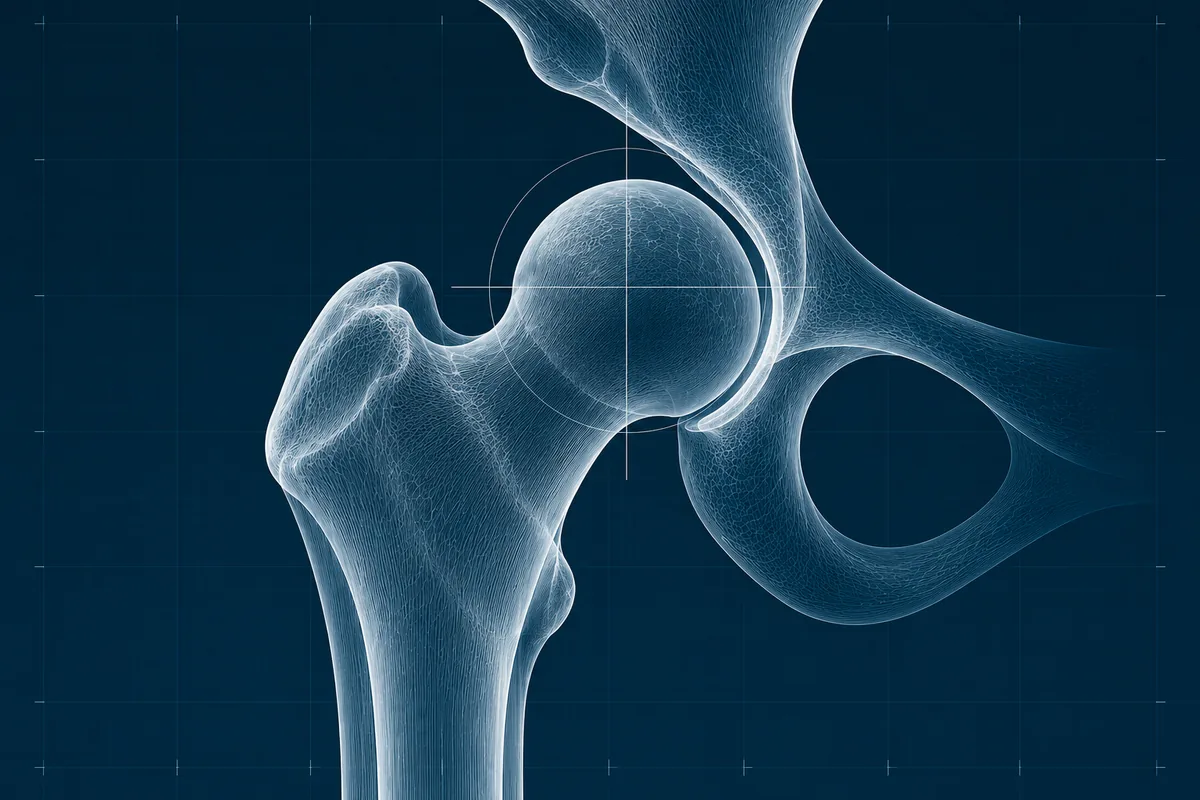
Hip dysplasia is a shallow cup that does not fully contain the ball of the hip. That overloads the edge of the joint, which often leads to tearing of the labrum and to early arthritis. A PAO changes the position of the cup so the joint is covered and the load is shared.
Related procedures


Patient storySydney had both hips preserved by Dr. Swann with arthroscopy-assisted labral repairs and minimally invasive periacetabular osteotomies (PAOs). Read Sydney’s story (opens in a new tab)
Schedule a Visit
Think your hip pain might be dysplasia?
Schedule an evaluation with Dr. Presley Swann to find out whether a PAO is an option for your hip.
Call 720-475-3355 · Text 720-445-6836
One-on-one patient support before and after surgery, through 365 Surgical (opens in a new tab).
The information on this page is for general education and is not medical advice. Every hip is different. For guidance about your own hip, please schedule an evaluation with Dr. Swann.